Apabila orang mencari"Saiz payudara cawan D dalam cm", mereka sering terkejut untuk mengetahui bahawa nombor itu tidak tetap. Di Singapura, Malaysia, dan Hong Kong, banyak pembeli berfikir bahawa aPayudara cawan Dsentiasa kelihatan sama—tetapisaiz colibergantung kepada kedua-duanyakugirandancawan. Berikut adalah panduan ringkas mengapa ukuran cawan D berubah dan apa maknanya untuk kesesuaian.


Berapakah Besar Cawan D dalam cm?
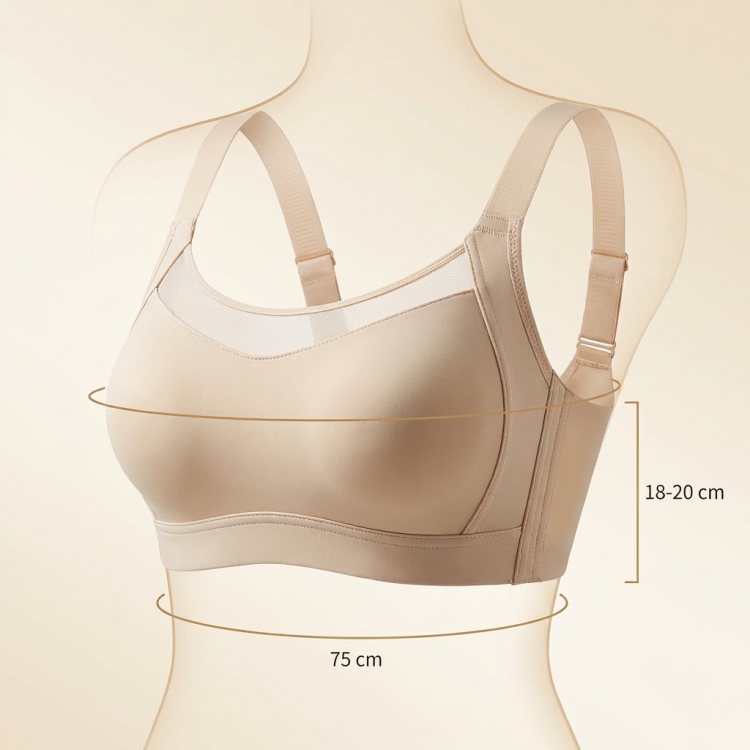
ACawan Dbiasanya bermaksudperbezaan kira-kira 18–20 cmantara dada (bahagian paling penuh) dan bawah dada (tulang rusuk).
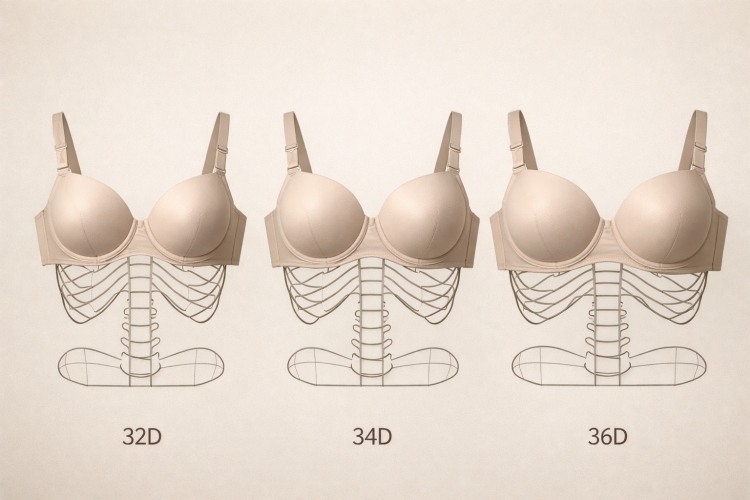
Perbezaan itu tetap sama—tetapijumlah keseluruhanperubahan dengan saiz jalur.
-
32D: bingkai yang lebih kecil, isipadu yang lebih padat
-
34D: seimbang, biasa di SG/HK
-
36D: isipadu lebih penuh, selalunya terasa lebih berat
Jadi ya,Saiz payudara cawan D dalam cmboleh berbeza mengikut jenama dan sistem saiz, tetapi kuncinya adalahsaiz jalur.
Mengapa Saiz Band Mengubah Rupa D Cup
Huruf cawan tidak berdiri sendiri. ACawan D pada jalur yang lebih kecilboleh kelihatan lebih penuh daripada D pada jalur yang lebih besar. Itulah sebabnya orang bertanya,"Saiz D apakah yang dianggap besar?"—jawapannya bergantung pada kugiran itu.
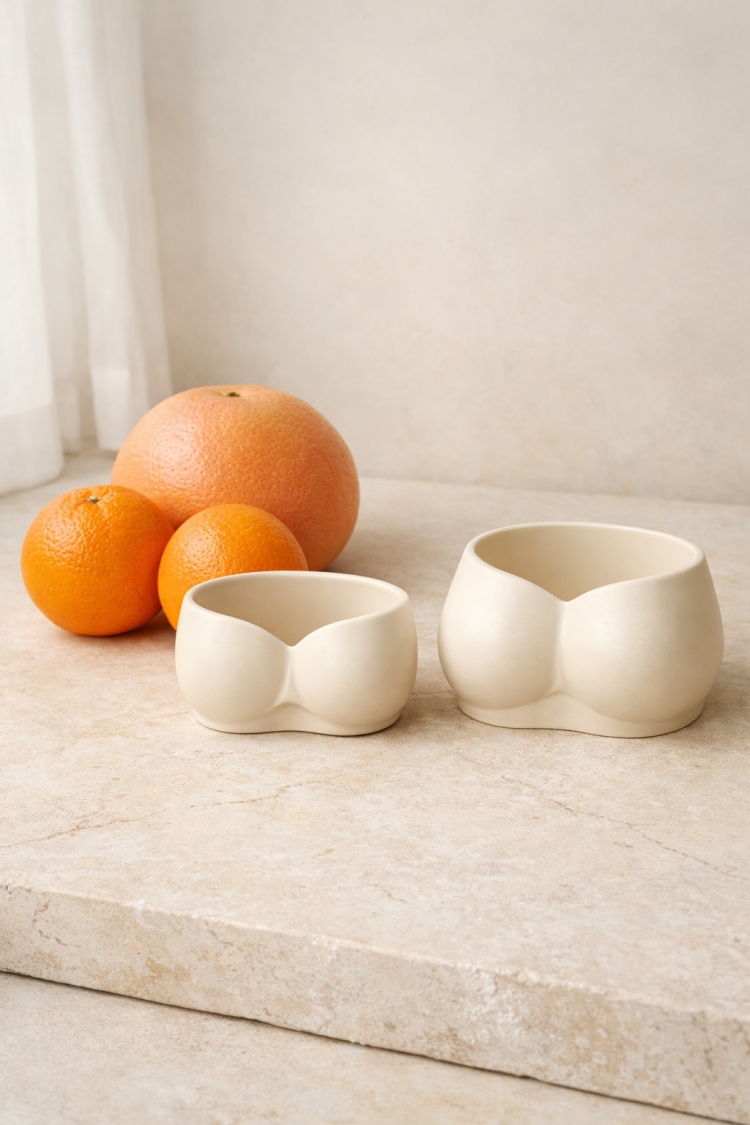
Visual yang berguna ialahContoh saiz payudara cawan D (buah):
-
32D≈ dua biji oren sederhana
-
36D≈ dua biji limau gedang kecil
Huruf cawan yang sama, isipadu yang berbeza.
Adakah Saiz D Lebih Besar Daripada C?
Ya. Saiz cawan boleh diterimaC < DLompatan adalah satu cawan volume—tidak ekstrem—tetapi ketara, terutamanya pada bingkai yang lebih kecil.
Adakah Payudara D Cup Berat?
Mereka boleh terasa berat tanpa sokongan. Dengan saiz yang betul, berat dibahagikan oleh tali, menjadikanbuah dada besarrasa lebih ringan—penting dalam cuaca panas SG dan MY.
Adakah Piala D Dianggap Menarik?
Daya tarikan adalah peribadi. Di SG, MY, dan HK, ramai yang menganggapPayudara cawan D menarikapabila mereka disokong dengan baik dan seimbang. Keselesaan dan keyakinan adalah yang paling penting.
Kesimpulannya
MemahamiCawan D dalam cmmembantu anda berbelanja dengan lebih bijak. Jangan tumpukan perhatian hanya pada huruf—saiz gelang + saiz cawanadalah apa yang benar-benar mentakrifkan kesesuaian.